


Will blue grid thermal tag paper affect color clarity or scanning recognition rate during thermal printing?
Release Time : 2026-02-02
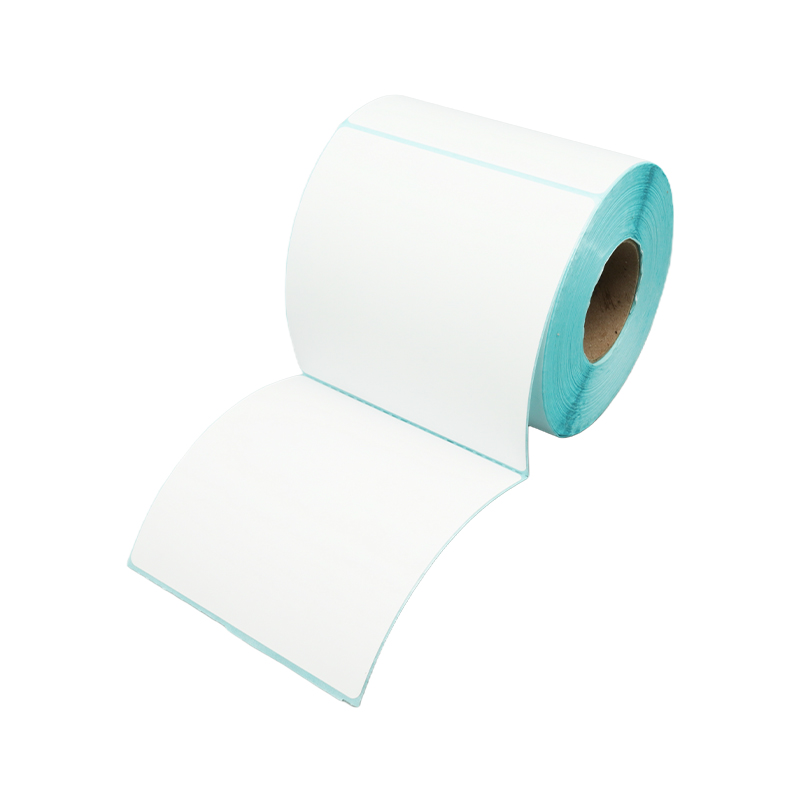
In high-efficiency management scenarios such as logistics, retail, warehousing, and healthcare, thermal label paper is widely used due to its advantages such as no need for ribbons, fast printing speed, and low cost. Blue grid thermal tag paper is becoming increasingly popular—its elegant grid lines not only improve visual neatness and facilitate manual label alignment, but also give the labels a professional and clean appearance.
1. Optical Compatibility of Thermal Color Development Mechanism and Background Color
The imaging principle of thermal paper relies on the chemical reaction between colorless dyes and developers in the coating when heated, generating dark images. Crucially, the thermal reaction only occurs at the heated points of the print head; unheated areas retain their original color. The blue grid typically uses low-saturation, light-colored environmentally friendly dyes, printed with extremely fine line widths and large spacing during the paper manufacturing stage. Its reflectance spectrum is mainly concentrated in the 450–490nm blue light band, while the thermally developed image absorbs all visible light, exhibiting high blackness.
2. Key to Barcode/QR Code Scanning and Recognition: Contrast and Edge Sharpness
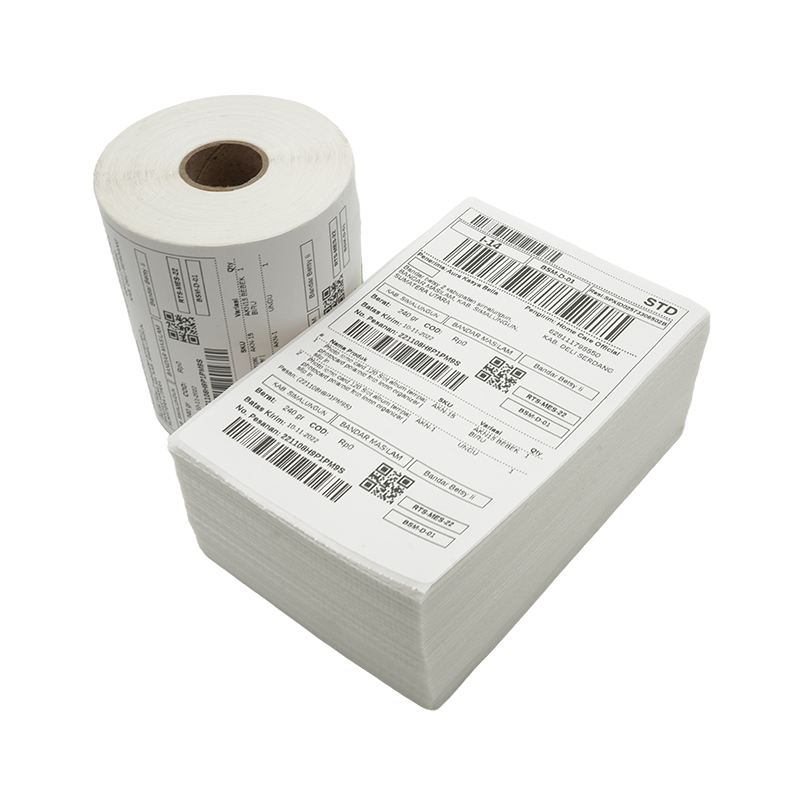
Modern barcode scanners primarily rely on the reflectivity difference between black and white areas for decoding. International standards require a minimum reflectivity difference of 30% for barcodes. Actual testing shows that high-quality blue grid thermal paper, after printing, achieves a reflectivity difference of 45%–60% between black barcodes and blue backgrounds, fully meeting Class A recognition standards. More importantly, the grid lines themselves are regular geometric patterns, producing no random noise and not interfering with the image algorithm's judgment of barcode boundaries. Conversely, some users have reported that a light blue grid reduces glare on a pure white background under strong light, thus improving the focusing stability of handheld scanners.
3. Refined Grid Design to Avoid Interference
To prevent misreading caused by overlapping grid lines and barcode lines, manufacturers strictly control grid precision: the line width is much smaller than the minimum barcode module width, and a non-aligned arrangement is used to avoid moiré patterns with horizontal/vertical barcodes. Meanwhile, the thermal coating evenly covers the entire surface, ensuring high color consistency after heating, regardless of whether the grid area is covered, and eliminating color differences caused by "background showing through."
4. Printer Compatibility and Parameter Optimization
Although blue grid paper uses the same printhead as standard thermal paper, some high-speed printers may require fine-tuning the heating energy to ensure sufficient color development because light-colored backgrounds absorb heat slightly less than pure white paper. The driver has built-in preset templates for light-colored background paper, eliminating the need for manual intervention.
Blue grid thermal tag paper is a clever fusion of functionality and aesthetics. By precisely controlling dye concentration, grid density, and thermal coating formulation, it provides visual guidance while ensuring high contrast and machine readability of printed text and images. For modern enterprises that pursue efficiency and a professional image, it is not only a label carrier but also a detailed tool to improve operational accuracy and brand image—clearly visible and easy to scan.
1. Optical Compatibility of Thermal Color Development Mechanism and Background Color
The imaging principle of thermal paper relies on the chemical reaction between colorless dyes and developers in the coating when heated, generating dark images. Crucially, the thermal reaction only occurs at the heated points of the print head; unheated areas retain their original color. The blue grid typically uses low-saturation, light-colored environmentally friendly dyes, printed with extremely fine line widths and large spacing during the paper manufacturing stage. Its reflectance spectrum is mainly concentrated in the 450–490nm blue light band, while the thermally developed image absorbs all visible light, exhibiting high blackness.
2. Key to Barcode/QR Code Scanning and Recognition: Contrast and Edge Sharpness
Modern barcode scanners primarily rely on the reflectivity difference between black and white areas for decoding. International standards require a minimum reflectivity difference of 30% for barcodes. Actual testing shows that high-quality blue grid thermal paper, after printing, achieves a reflectivity difference of 45%–60% between black barcodes and blue backgrounds, fully meeting Class A recognition standards. More importantly, the grid lines themselves are regular geometric patterns, producing no random noise and not interfering with the image algorithm's judgment of barcode boundaries. Conversely, some users have reported that a light blue grid reduces glare on a pure white background under strong light, thus improving the focusing stability of handheld scanners.
3. Refined Grid Design to Avoid Interference
To prevent misreading caused by overlapping grid lines and barcode lines, manufacturers strictly control grid precision: the line width is much smaller than the minimum barcode module width, and a non-aligned arrangement is used to avoid moiré patterns with horizontal/vertical barcodes. Meanwhile, the thermal coating evenly covers the entire surface, ensuring high color consistency after heating, regardless of whether the grid area is covered, and eliminating color differences caused by "background showing through."
4. Printer Compatibility and Parameter Optimization
Although blue grid paper uses the same printhead as standard thermal paper, some high-speed printers may require fine-tuning the heating energy to ensure sufficient color development because light-colored backgrounds absorb heat slightly less than pure white paper. The driver has built-in preset templates for light-colored background paper, eliminating the need for manual intervention.
Blue grid thermal tag paper is a clever fusion of functionality and aesthetics. By precisely controlling dye concentration, grid density, and thermal coating formulation, it provides visual guidance while ensuring high contrast and machine readability of printed text and images. For modern enterprises that pursue efficiency and a professional image, it is not only a label carrier but also a detailed tool to improve operational accuracy and brand image—clearly visible and easy to scan.