


How can three-proof thermal label paper be protected from damage caused by oil and friction during logistics and transportation?
Release Time : 2026-03-18
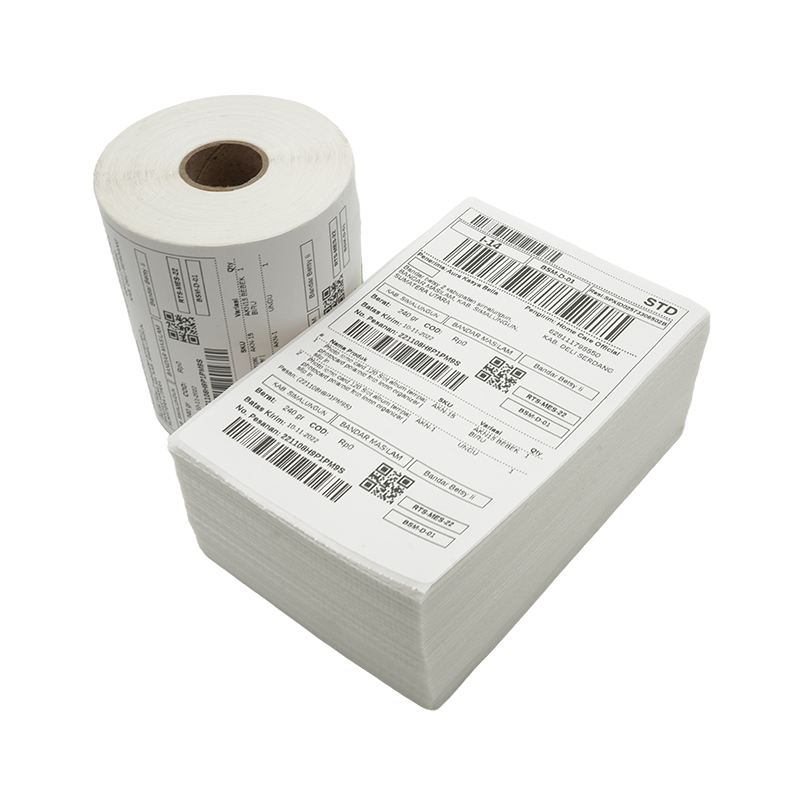
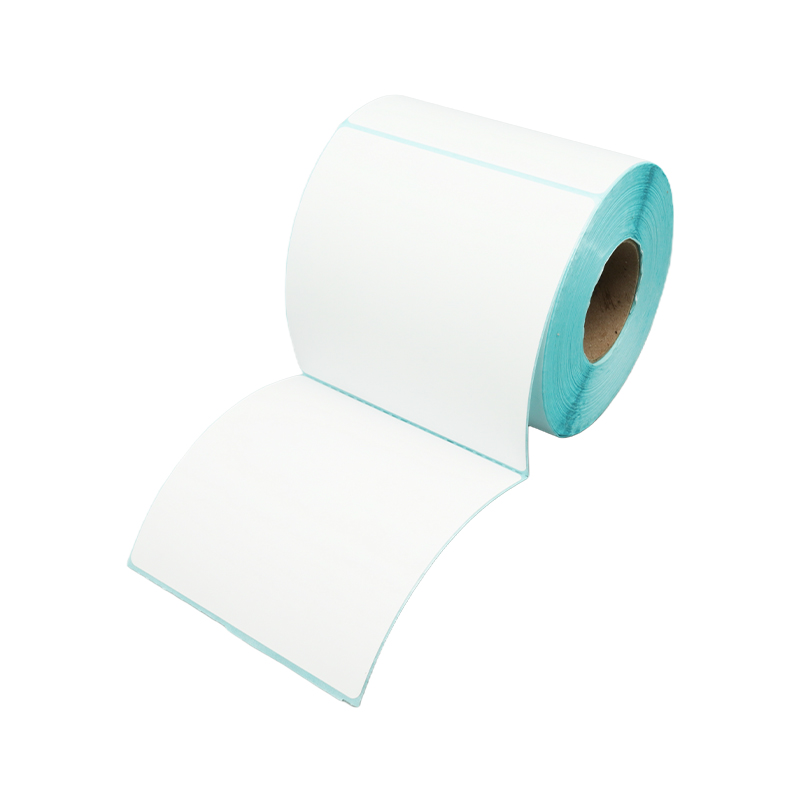
In the complex environment of logistics and transportation, cargo labels often face multiple challenges such as oil penetration, mechanical friction, and moisture erosion. Three-proof thermal label paper, with its unique functional design, has become a key material for ensuring information readability. Its core advantage lies in the synergistic optimization of material formulation and surface processing to build a three-dimensional protective system against oil and friction, ensuring that the label remains clearly legible in dynamic transportation scenarios.
Regarding the issue of oil penetration, three-proof thermal label paper employs a multi-layer composite structure for active defense. Its surface layer is typically covered with a high-density nano-oleophobic coating. This coating reduces surface energy, forming a microscopic uneven structure that makes it difficult for oil substances to adhere. When oil comes into contact with the label, it forms rolling droplets on the coating surface rather than spreading and penetrating. Combined with the oil-absorbing microporous design of the middle layer, small amounts of residual oil are directionally adsorbed to non-developable areas, avoiding interference with the chemical reaction of the thermally sensitive layer. The bottom layer is tightly bonded to the packaging material with a high-strength adhesive, preventing oil from entering through edge gaps, forming a fully enclosed protection from the outside in.
In terms of friction resistance, the label paper achieves dual protection through material modification and structural reinforcement. The thermal color-developing layer uses a special cross-linked polymer as its substrate, forming a three-dimensional network structure between its molecular chains, significantly improving the material's abrasion resistance. Microcrystalline ceramic particles embedded in the surface coating form a hard protective layer. When the label rubs against handling equipment, shelves, etc., these particles disperse localized pressure, preventing scratches on the color-developing layer. Simultaneously, the rounded corners of the label edges reduce stress concentration, and combined with the flexible cushioning effect of the adhesive backing, effectively reducing the risk of label curling or detachment caused by transportation vibrations.
The combined effect of oil and friction often leads to problems such as blurred text and coating peeling in traditional labels. Three-proof thermal label paper achieves comprehensive protection through the synergistic effect of its functional layers. When oil and friction act on the label, the oleophobic coating first blocks most of the oily substances, and the remaining trace amounts are absorbed by the oil-absorbing fibers in the middle layer, ensuring the color-developing layer remains uncontaminated. At the same time, the combined design of the hard protective layer and the elastic substrate allows the label to maintain a smooth surface while releasing energy through micro-deformation under friction, preventing coating cracking. This layered protection mechanism allows the label to maintain stable performance even in scenarios involving alternating oil stains and friction.
Extreme environments in logistics and transportation place higher demands on label durability. Three-proof thermal label paper expands its application boundaries through environmentally adaptable design. For example, to address the issue of low-temperature condensation in cold chain transportation, the label employs a hydrophobic surface treatment technology, causing water droplets to form a large contact angle on the surface and roll off quickly, preventing moisture penetration and color layer failure. In high-temperature storage scenarios, the heat-sensitive material, by adding antioxidants and heat stabilizers, inhibits chemical reactions caused by temperature increases, ensuring that the text remains clearly legible even after long-term storage. This full-temperature adaptability enables the label to cope with the challenges of temperature fluctuations in the logistics process.
In practical applications, the protective performance of three-proof thermal label paper needs to be verified through standardized testing. During the production process, equipment such as simulated transportation vibration tables and oil stain spraying devices are used to conduct continuous friction and oil stain contact tests on the labels, observing their color development stability and coating integrity. Furthermore, accelerated aging tests are used to evaluate the performance degradation of the labels after long-term use, ensuring that they meet the stringent requirements of the logistics industry for label lifespan. These test data provide a basis for optimizing the label's manufacturing process, driving continuous improvement in protective performance.
From a cost-effectiveness perspective, although three-proof thermal label paper has a higher unit price than ordinary labels, its comprehensive protective performance can significantly reduce loss costs in the logistics process. Traditional labels, due to oil stains or friction damage, often lead to problems such as misdelivery and missing information, resulting in additional hidden costs for replenishment and tracing. Three-proof labels, by extending their lifespan and reducing replacement frequency, help companies achieve overall process efficiency improvements. This value is particularly prominent in industries with extremely high requirements for label integrity, such as food and pharmaceuticals.
With the development of IoT technology, three-proof thermal label paper is deeply integrating with intelligent identification technology. By embedding RFID chips or QR codes in the labels, combined with their oil resistance and friction resistance, a more reliable cargo tracking system can be built. For example, in the transportation of chemical products, the labels can withstand the corrosive effects of oily substances and can quickly obtain cargo information through scanning, achieving the dual goals of safety management and efficiency improvement. This technological evolution is driving the transformation of three-proof thermal label paper from a single information carrier to an intelligent logistics component.